A homemade 'motorbike' — the perils of optimisation
The v1 motorised bicycle (or motorbike for short) I made used a 2-stroke engine scavenged from a chainsaw. The clutch design on that used a second brake lever to actuate a cable, bringing two disks together as a primitive friction clutch. The advantage was that you didn't have to pull-start the engine: you pedal the bike up to speed, then pull the 'brake' lever and the engine splutters into life. The disadvantage is that I'm easily confused, and it's very easy in a moment of absent-mindedness to start the engine and lurch forwards when you intended to brake.
That bicycle got stolen, and then returned to me by a local homeless friend, who said he'd been given it by the thief after they burned their leg on the exhaust.
When it was stolen a second time, I moved onto the v2 version (pictured below).
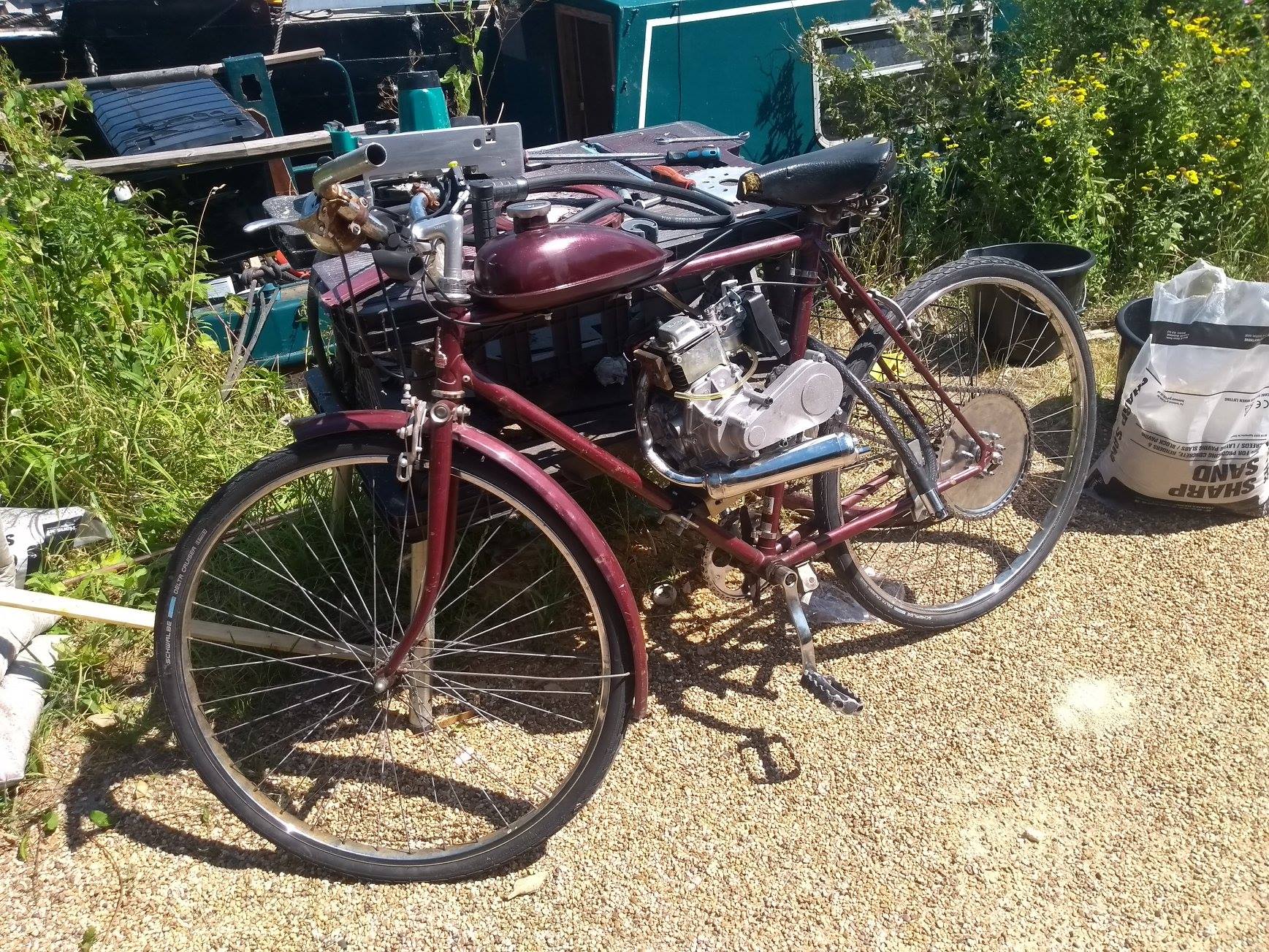
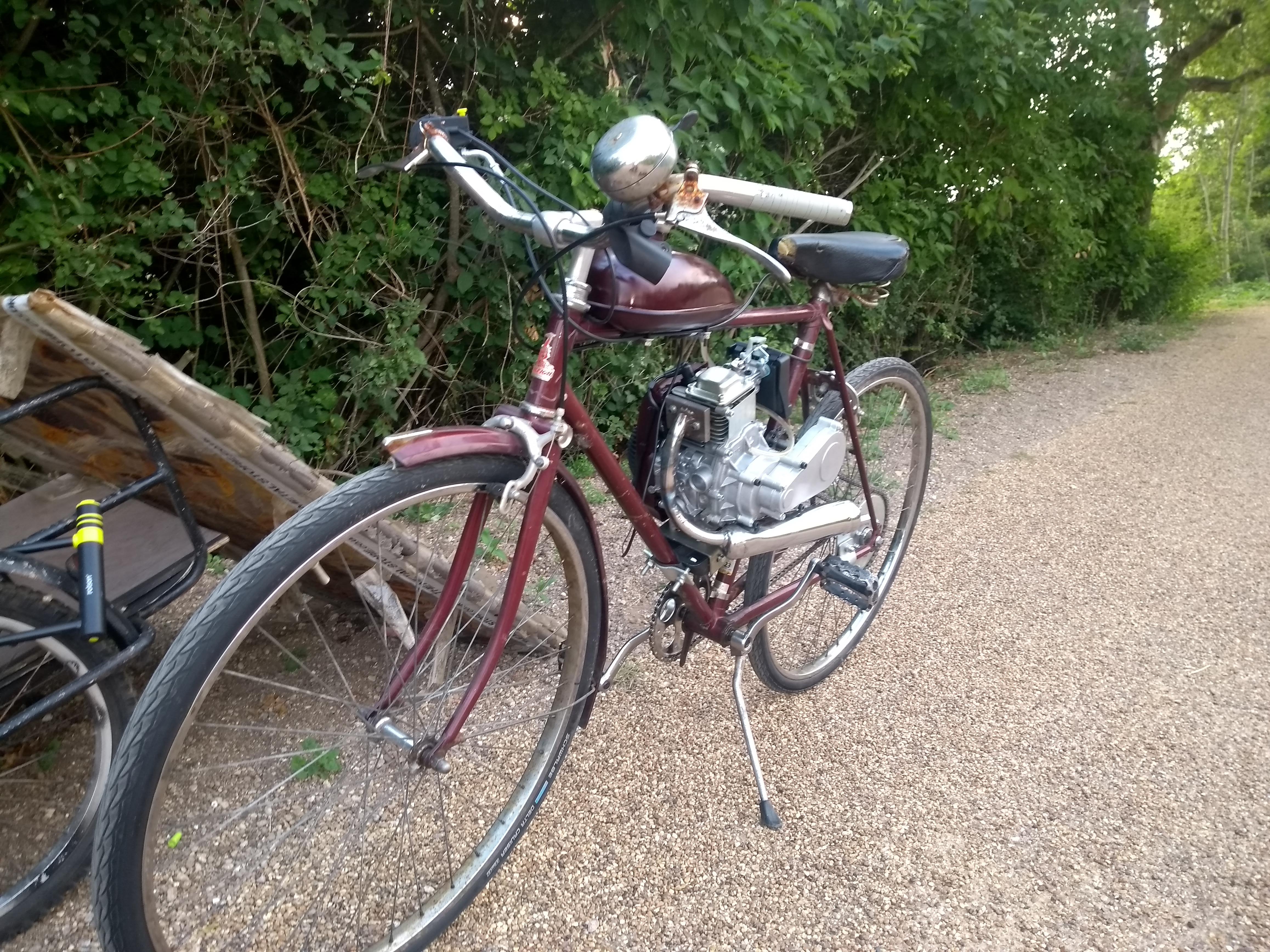
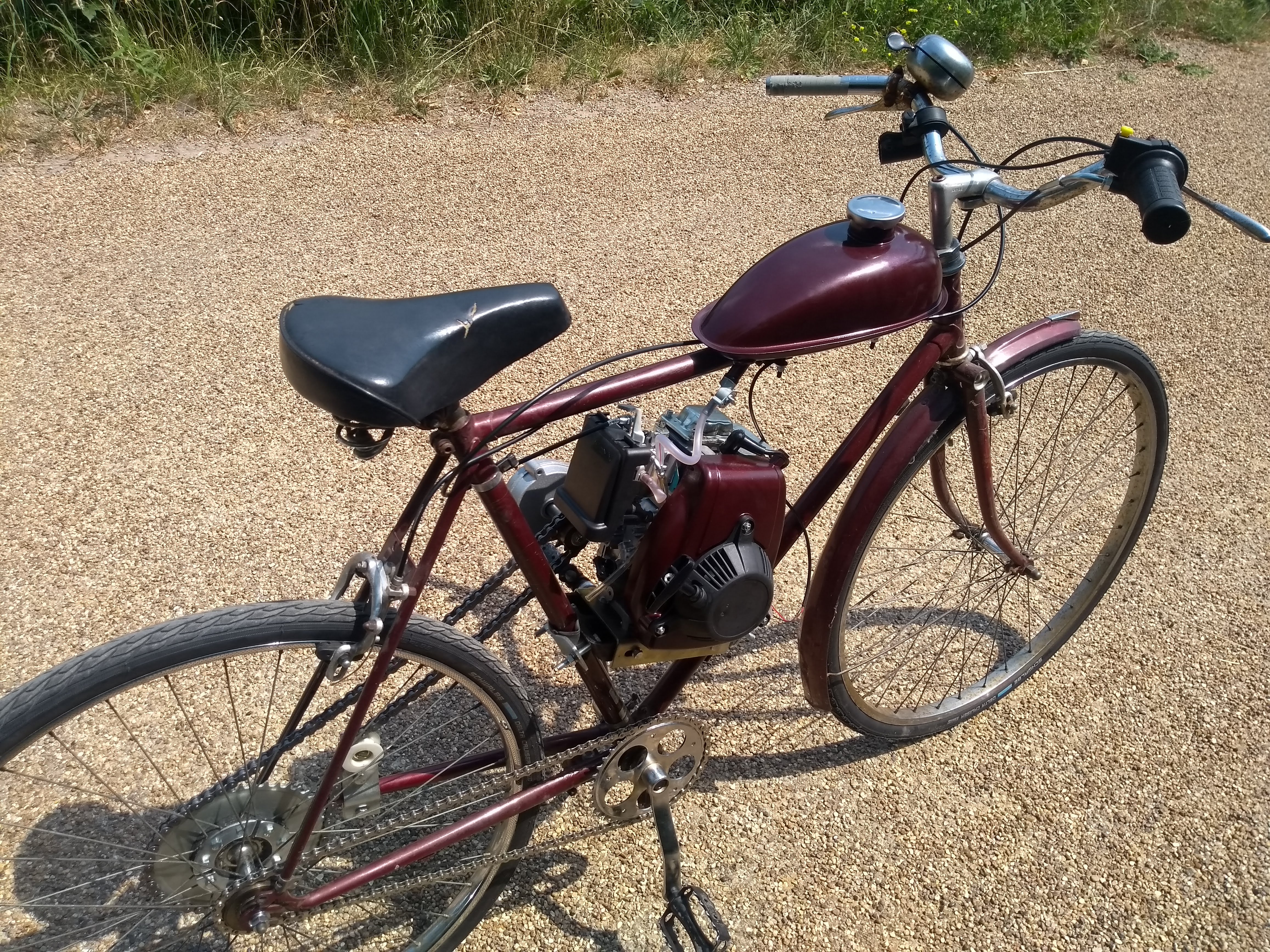
This v2 used a cheap GXH50 clone instead. It's a 4-stroke, with decent low-end torque, and I went for an off-the-shelf centrifugal clutch design over the bodged friction disk. This meant you had to pull-start the engine, but it prevented the complications of pulling the wrong lever. I re-welded the exhaust run this time to tuck it under the reduction gear to avoid leg-burning. I also added a bell.
When this bike got stolen, it didn't get returned to me, so I can only assume the exhaust modification was successful.